Eisenhower matrix for ADHD: sort a real-life list
Drifta is an iPhone task app for ADHD that gives every task its own time window.
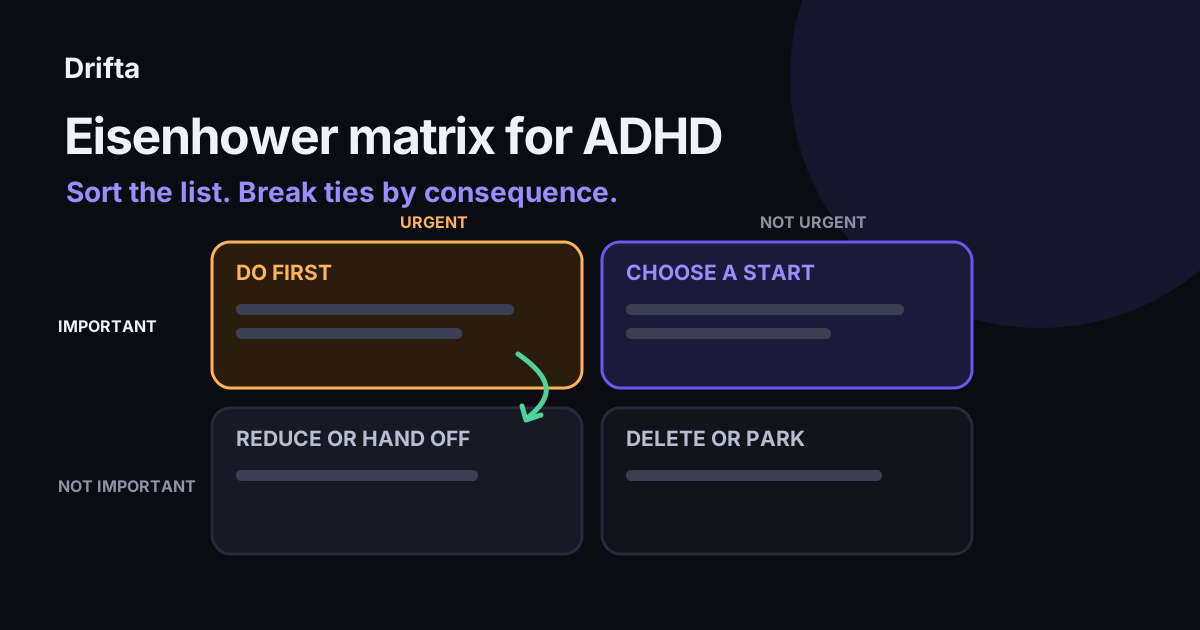
An Eisenhower matrix for ADHD sorts tasks on two separate questions: does delay create a real consequence soon, and does the task support a responsibility or goal that matters? Put each task in one of four boxes, then choose from the urgent-and-important box first. When tasks tie, do the one with the least reversible consequence of delay.
An Eisenhower matrix for ADHD works when urgency and importance get separate, concrete tests. Ask whether waiting creates a real consequence soon, then ask whether the task supports a responsibility or goal that matters. Start in the urgent-and-important box, and break ties by choosing the consequence that is hardest to reverse.
The familiar 2-by-2 grid can fail when every square feels the same. The National Institute of Mental Health names "poor time management, planning, or organization" among problems adults with ADHD may experience. The useful part of the matrix is externalizing those judgments, one task at a time.
What do urgent and important mean in an ADHD priority matrix?
Urgent means a real consequence arrives soon if the task waits. Important means the task serves a responsibility, value, or longer-term result you have already chosen. A task can qualify for both, either, or neither.
The Eisenhower Presidential Library dates the source address to August 1954. In it, Dwight D. Eisenhower relayed a college president's distinction between urgent problems and important ones. Treat that distinction as a warning rather than a law. Some tasks are plainly both, such as submitting a required form before a midnight cutoff.
| Axis | Ask | Evidence that counts |
|---|---|---|
| Urgent | What happens before tomorrow if this waits? | A fee, missed cutoff, blocked person, health or safety issue |
| Important | Which responsibility or goal does this serve? | Work owed, home care, money, relationship, or chosen goal |
How do you use the blank 2-by-2 matrix?
The blank 2-by-2 matrix works best with no more than 12 current tasks. Write them beside the grid, then place each one once. Rewrite unclear wording before sorting. "Taxes" cannot be judged well; "download last year's return" can.
| Urgent | Not urgent | |
|---|---|---|
| Important | Do first ____________________ ____________________ ____________________ | Choose a start ____________________ ____________________ ____________________ |
| Not important | Reduce or hand off ____________________ ____________________ ____________________ | Delete or park ____________________ ____________________ ____________________ |
Use "not urgent" as a timing description, never as a synonym for optional. Important preparation lives there. That box keeps next month's task from becoming next week's emergency.
What does a filled Eisenhower matrix look like?
Take a Wednesday list with eight items: pay an electric bill due today, send a client correction by 3 p.m., schedule a dental cleaning, outline a November presentation, reply to a group chat, buy a replacement phone case, upload photos for a coworker, and compare three desk lamps.
| Urgent | Not urgent | |
|---|---|---|
| Important | Do first Electric bill due today Client correction by 3 p.m. | Choose a start Schedule dental cleaning Outline November presentation |
| Not important | Reduce or hand off Upload photos for coworker | Delete or park Group chat reply Phone case Desk lamp comparison |
The matrix does not claim the group chat has no value. It says the chat has no consequence today that outranks the bill or client correction. "Upload photos" may be urgent because a coworker is waiting, while its low importance to your own responsibilities makes it a good candidate for a quick handoff or a tightly bounded slot.
How do you break a tie when two tasks share a box?
An Eisenhower matrix tie goes to the task with the least reversible consequence. A five-dollar late fee can be repaired. Losing an application window cannot. A slightly awkward reply can be sent tomorrow. A coworker unable to finish a client deliverable may need your file now.
When consequences are equally reversible, choose the task that frees another person. If nobody is blocked, choose the shorter task only when finishing it creates usable room for the longer one. This fallback rule replaces a vague feeling with an observable effect.
The older method in how to prioritize when everything feels urgent focuses entirely on consequence. The matrix adds a second axis for importance, which helps protect preparation and maintenance work from living forever behind today's noise.
What should you do with the important but not urgent box?
The important-but-not-urgent box needs an earliest sensible start before you leave the matrix. "Outline November presentation" might become "open slides and list five section names, Friday after 10 a.m." That small start keeps it from returning unchanged during the next sorting session.
This is where a calendar alone tends to fail flexible ADHD tasks. A calendar wants one fixed slot. Preparatory work often needs a range. If you miss Friday at 10, the task still matters Friday afternoon.
In Drifta, that range can be stored as an earliest start and a separate deadline. Daily Tasks, Up Next, and Backlog then hold the result of the sort without requiring four permanent matrix lists. The matrix makes the decision; the task app carries it forward.
When should you skip the Eisenhower matrix?
The Eisenhower matrix adds little when one task is already clearly time-critical, the list has fewer than four items, or you are too tired to make eight separate classifications. Write the one task down and start it.
A matrix also cannot make a vague project actionable. If "prepare launch" sits in the urgent-and-important box, the next move is still unclear. Use the smallest next step method to turn the project into a physical action, then place that action in the grid.
For most lists, five minutes is enough. Sort once, move the selected actions into the place you already check, and discard the grid. Keeping four quadrants tidy forever creates another system to maintain, which defeats the reason for using the matrix.
Common questions
Does the Eisenhower matrix work for adults with ADHD?
It can work when urgent and important are defined with concrete tests instead of feelings. Use a real deadline or consequence for urgency, and a named responsibility or goal for importance. Keep the matrix to one current list rather than maintaining four permanent backlogs.
What if every task feels urgent in an ADHD priority matrix?
Ask what changes before tomorrow if each task waits. A shutoff notice, expiring form, or person blocked on your work counts as urgent. Discomfort, guilt, and a red badge may feel loud, but they need a concrete near-term consequence before they enter the urgent column.
What goes in the important but not urgent quadrant?
Put preventive and preparatory work there: booking a checkup before a problem, drafting a report before its deadline week, or replacing an air filter on schedule. Give one of these tasks an earliest start so it does not remain invisible until it becomes urgent.
How often should I remake an Eisenhower matrix?
Remake it when the list or consequences change, usually once or twice a week. The matrix is a sorting pass, not a second task manager. After sorting, move the chosen actions into the system you already check and discard the temporary grid.
This article shares practical organizing ideas. It is not medical advice. For diagnosis or treatment questions, talk with a qualified clinician.