Focus timer math: how many sessions fit a workday
Drifta is an iPhone task app for ADHD that gives every task its own time window.
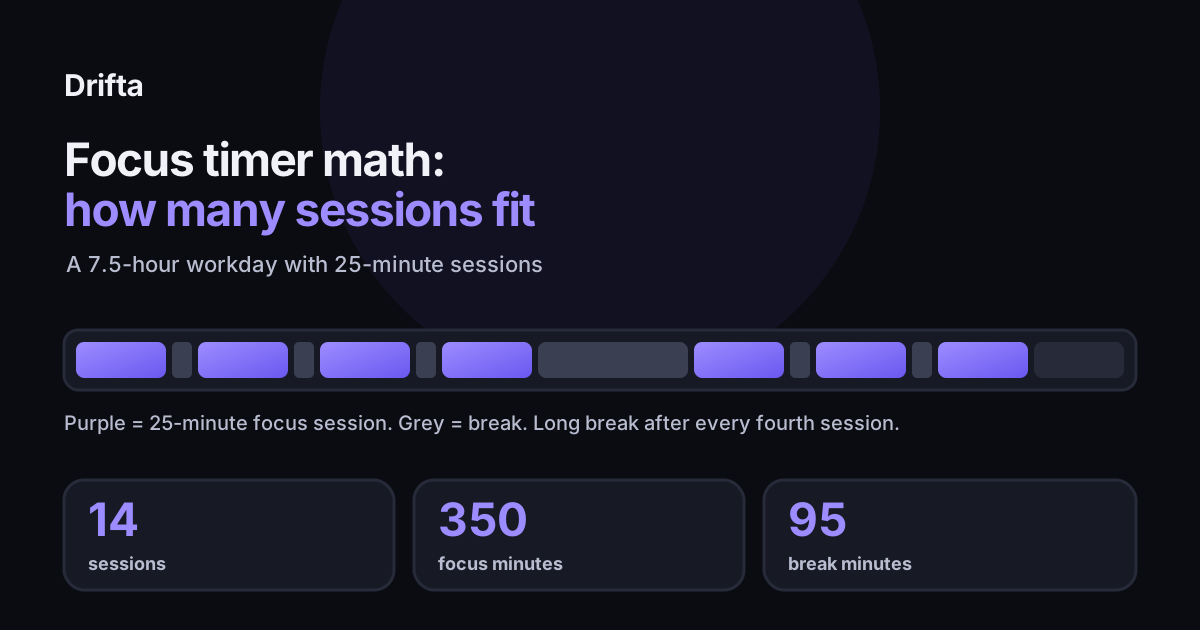
A 7.5-hour workday with a 30-minute lunch fits 14 focus sessions if each session is 25 minutes with the standard Pomodoro breaks, which is 350 minutes of focused work. Francesco Cirillo's method uses 25-minute work intervals, 5-minute short breaks, and a 15 to 30 minute long break after every four sessions, according to Todoist's summary of the technique. The count changes with the session length and the break after it, so work it out with your own numbers before you plan the day.
A 7.5-hour workday with a 30-minute lunch fits 14 focus sessions if each one is 25 minutes with the standard Pomodoro breaks, which gives you 350 minutes of focused work. The count depends on how long each session runs and how long the break after it lasts, so it is a short calculation, not a fixed rule. Use the formula below with your own numbers before you lay out the day.
How many focus sessions fit in a workday?
Take a 9:00 a.m. to 5:00 p.m. day with a 30-minute lunch. That leaves 450 minutes. Francesco Cirillo's Pomodoro Technique uses 25-minute work intervals, a 5-minute short break after each one, and a 15 to 30 minute long break after every four, according to Todoist's description of the method. I used 15 minutes for the long break, the low end of that range.
Four pomodoros with three short breaks and one long break take 130 minutes, which is 100 focus minutes and 30 minutes of breaks. Three of those blocks take 390 minutes. That leaves 60 minutes, enough for two more pomodoros with one short break between them, which is 55 minutes. The total is 445 minutes, so the day ends with 5 minutes to spare. Count it up: 14 pomodoros, 350 focus minutes, 95 break minutes.
How do you work out the count for your own timer?
When every break is the same length, the formula is short. Divide the available minutes plus one break by the session plus one break, then round down. For a 50-minute session with a 10-minute break, that is (450 + 10) ÷ 60, which gives 7.67, so 7 sessions. The break after the final session does not need to fit, which is why the formula adds one break back in.
A long break changes the count. The Pomodoro schedule replaces the short break after the fourth, eighth, and twelfth session with a 15-minute break. Each of those costs 10 more minutes than a standard break, and in a 450-minute day that extra 30 minutes is what drops the total from 15 to 14. Long breaks are worth taking, but you should see the cost in the schedule before you commit to them.
What do the breaks cost you across three setups?
The same 450 minutes produce very different days depending on the session length. Here is how three common setups compare.
| Setup | Sessions | Focus minutes | Break minutes | Minutes left |
|---|---|---|---|---|
| 25-minute pomodoros, 5-minute breaks, 15-minute long break after every four | 14 | 350 | 95 | 5 |
| 50-minute sessions, 10-minute breaks | 7 | 350 | 60 | 40 |
| 5-minute starts, 5-minute breaks | 45 | 225 | 220 | 5 |
The first two rows give the same focused time, but they feel different. Fourteen short sessions give you fourteen chances to stop and restart. Seven long sessions give you fewer starts and longer stretches to hold. The third row gives the most starts and the least focus, which is useful when getting going is the whole problem.
Why does a 25-minute block feel too long to start?
The 25 minutes is a working rhythm you can change. Gloria Mark, a researcher who has studied how people use screens, reports that the average time spent on one screen before switching is 47 seconds, according to her attention span research page. A 25-minute block is about 32 of those intervals in a row. That comparison is not a claim about how long you can focus. It explains why a block can feel like a wall at 2:30 p.m., when the first few minutes are the hardest part to hold.
Where do five-minute starts fit in the count?
Use the third row to get into a task you keep avoiding, then move to a longer session once the first move is done. Drifta's built-in focus timer is free for sessions up to five minutes, and Pro allows longer ones, so the free timer fits the start and a Pro session can carry the middle. If you only have the free timer, string five-minute sessions together and count how many you finish. That count is more honest than a daily goal.
What does a meeting do to the count?
Meetings are the usual reason a planned count falls apart. Take the same day and put a 60-minute meeting at 11:00 a.m. That leaves 390 minutes. Twelve pomodoros with the same breaks fit in 375 minutes, with a long break after the fourth and eighth but none after the last one, so the day holds 12 sessions and 300 focus minutes. The meeting did not cost you one session. It cost you two, and 50 focus minutes, because the shape of the day changed.
What should you do when the count comes out short?
If the math gives you seven sessions and you need eight, do not cut lunch to make room. Drop the break after the last session of the day, or shorten the short breaks to five minutes if they are longer than that. If the eighth session still does not fit, move the least important task to tomorrow and write down why. A schedule that fits the day is worth more than a schedule that looks full on paper.
If the work needs a longer block, the comparison of work timer types covers which length suits which kind of task, and the guide to using a focus timer with ADHD covers how to end a session without losing the thread. Both explain the same trade-off this math shows: more starts or more time per start, not both.
Common questions
How many 25-minute focus sessions fit in an eight-hour day with no lunch?
Fifteen, if you keep the standard breaks. That is 375 minutes of focus and 100 minutes of breaks, with a 15-minute long break after the fourth, eighth, and twelfth session. The schedule ends at 475 minutes, so about five minutes are left over.
Is a longer focus session better than several short ones?
Not on its own. A longer block gives more focused minutes per start, but each start also costs a warm-up. Gloria Mark's screen research finds that attention on one screen often breaks within a minute, so a session you can restart is usually worth more than a long one you spend half-watching the clock.
Do breaks count against my focus time?
They are part of the cycle, so the math above counts them. A focus timer that only counts the work minutes will show a higher total than the time you actually spend. Plan the day with the breaks included, or the schedule will run late by the second block.
This article shares practical organizing ideas. It is not medical advice. For diagnosis or treatment questions, talk with a qualified clinician.