How to make a to-do list you'll actually use
Drifta is an iPhone task app for ADHD that gives every task its own time window.
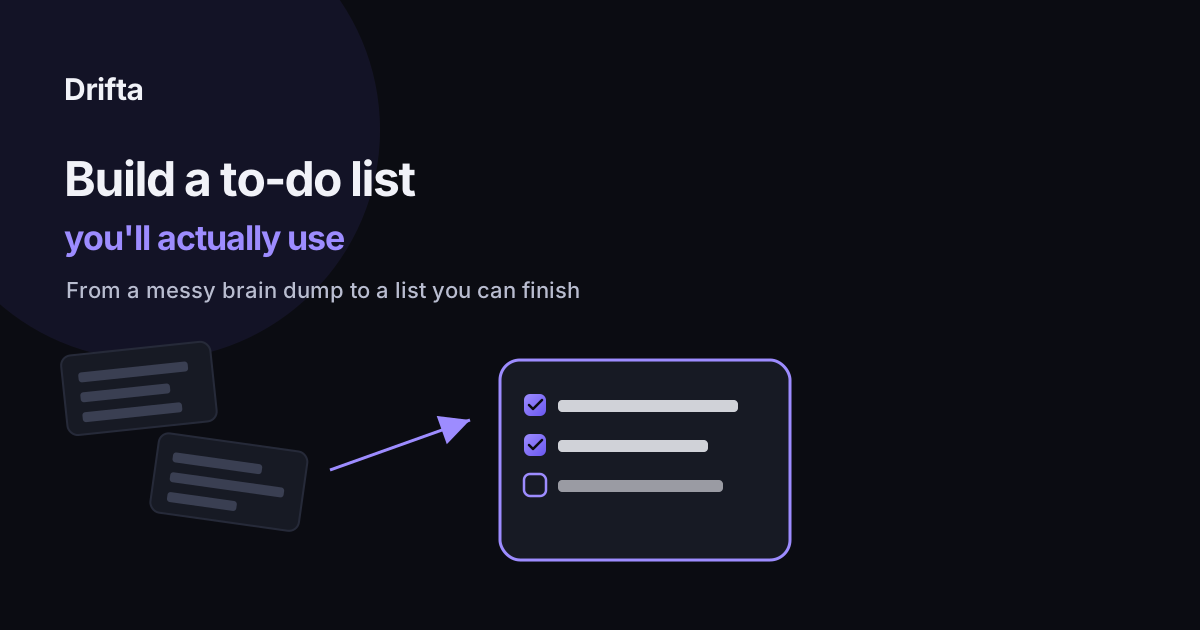
A to-do list you'll actually use needs three things a raw brain dump doesn't have: fewer items than feel comfortable, a concrete first action on each one, and a separate place for everything that isn't happening today. Build it by dumping everything out of your head first, then sorting that dump into three lists instead of one, then rewriting anything vague into its actual next step. Most to-do lists fail at the sorting step, not the writing-it-down step.
A to-do list survives longer than a day when it has three things most brain dumps don't: fewer items than feels natural, a real first action on each line instead of a project title, and somewhere else for everything that isn't happening today. The order matters. Dump everything out of your head first, sort that dump into three separate lists, then rewrite anything vague into its actual next step. Most lists don't fail because writing them down didn't work. They fail at the sorting step, which a lot of people skip entirely.
Step one: get it all out first
Before building anything resembling a usable list, empty your head onto paper or into an app without editing, judging, or sizing anything yet. Mixing capture and organizing in the same pass is what turns list-making into a chore that gets avoided; separating them makes each half faster. You did a brain dump. What to do with the list next covers this first pass in more detail, including what to do with the inevitable pile of vague half-thoughts that come out alongside the clear tasks.
Step two: split it into three lists, not one
The raw dump is not the to-do list. It's the input. The next move is sorting it into three separate lists: what's actually happening today, what's ready to start but not scheduled yet, and everything else that can wait. Today, next, later: a three list system that stays small lays out this exact split, and the reason it works is almost mechanical: a single list mixing a five-minute errand with a multi-day project forces your eyes to scan past the project every time you're looking for something quick, which is exactly the friction that makes people stop opening the list at all.
Step three: rewrite anything vague
A line that says "taxes" or "car" isn't a task, it's a category with no obvious entry point, and a list full of categories instead of actions is why so many to-do lists get copied unfinished from one day to the next. How to cut decisions out of your task list covers rewriting each vague line into its actual first physical action: not "taxes," but "find last year's return," not "car," but "check when the registration expires." A study by psychologists E.J. Masicampo and Roy Baumeister found that making a specific plan for an unfinished task, not completing the task, is what actually quiets the mental pull of leaving it undone. A vague line doesn't count as a plan, which is part of why it keeps nagging at you every time you see it without moving.
How long should today's list actually be
Psychologist George Miller's widely cited 1956 paper put short-term memory capacity at around seven items, plus or minus two, and later research by Nelson Cowan revised that estimate down to closer to four once rehearsal and outside support are accounted for. A daily to-do list longer than that means you have to keep re-reading it while you work, which adds a small tax to every single glance. Three to five items for today, with everything else parked in a next-up or backlog list, keeps the list inside the range your working memory can actually carry.
A worked example
Here's a raw Tuesday-morning dump next to the same items sorted and rewritten:
| Raw dump | Sorted and rewritten |
|---|---|
| Taxes | Backlog: find last year's return (not due for weeks) |
| Email Sarah back | Today: reply to Sarah's last message, five minutes |
| Car | Next: check when registration expires |
| Clean the kitchen | Today: clear the counter only, ten minutes |
| Plan the trip | Backlog: no date attached yet |
Five raw items become two things for today, one thing that's ready whenever there's a spare ten minutes, and two things that can sit untouched without costing anything. That's the whole method: dump, sort into three buckets, then make the vague survivors concrete enough to act on the moment you see them again.
When to re-sort the list
A to-do list isn't a one-time setup; it drifts back toward a pile within a few days if nothing ever moves between the three buckets. A short daily pass works better than an occasional big cleanup: each morning, pull no more than three to five items from Next into Today, and each evening, glance at Backlog for anything that's quietly become urgent. That's usually a two-minute check, not a full reorganization.
The bigger reset is the one to watch for. If Today keeps filling up with leftovers from yesterday instead of new items, or Next has grown past ten or fifteen entries, that's a sign the sorting step got skipped for a while, not a sign the system itself failed. The fix is the same one used to build the list in the first place: dump what's actually in your head right now, sort it back into three sizes, and rewrite whatever's gone vague again.
On bad-energy days, shrink the list further
Some days even a five-item list feels like too much, and forcing the same structure on those days just adds guilt to the pile. Keep a low energy task list for bad brain days covers building a shorter backup list ahead of time, three or four genuinely small tasks, so a bad day has somewhere to go that isn't either the full list or nothing at all.
Does the app matter?
Less than the structure does. The three-list split, today, next, backlog, works on paper, in Apple Reminders, in Notion, or in a dedicated app like Drifta, which builds Daily Tasks, Up Next, and Backlog into three separate views so today's list can't quietly absorb everything else by default. The app is a container for the method. The method is what makes the list survive past the first day.
Common questions
How many items should be on a to-do list?
Somewhere around three to five for today's list works for most people. Psychologist George Miller's 1956 research put working memory capacity at roughly seven items, and later work by Nelson Cowan found the real number, once rehearsal is controlled for, closer to four. A daily list longer than that stops being something you can hold in mind and starts being something you have to keep re-reading.
What's the best to-do list app for ADHD?
The best one is whichever app makes it easiest to keep today's list short and separate from everything else you might do eventually. Drifta does this by splitting tasks across Daily Tasks, Up Next, and Backlog, but the same three-list structure works in almost any app, or on paper, once you actually use it.
Why do I keep rewriting the same to-do list?
Usually because most of what's on it is too vague to act on, so it survives the day undone and gets copied to tomorrow's list unchanged. A study by psychologists E.J. Masicampo and Roy Baumeister found that a specific plan for an unfinished task, not finishing it, is what actually quiets the nagging feeling of leaving it undone. Rewriting the same line without changing it skips that step entirely.
Should everything go on one to-do list?
No. A single list that mixes five-minute tasks, multi-day projects, and someday-maybe ideas is the most common reason to-do lists get abandoned. Splitting into a short today list, a ready-to-start list, and a backlog keeps each one small enough to actually read.
This article shares practical organizing ideas. It is not medical advice. For diagnosis or treatment questions, talk with a qualified clinician.